



ISSB blocks
Interlocking stabilised soil blocks made from local soil, for faster and lower-carbon building.
Strong, durable walls from local soil, with only 8–10% cement
Contractors need to build faster with fewer materials. Self-builders need strong walls on a budget they can keep to, and housing programmes need durable homes at scale. Interlocking stabilised soil blocks (ISSB) are pressed from local soil with 8–10% cement and no kiln.
Who it is for
Pressed, cured and dry-stacked, with no mortar in the horizontal joints
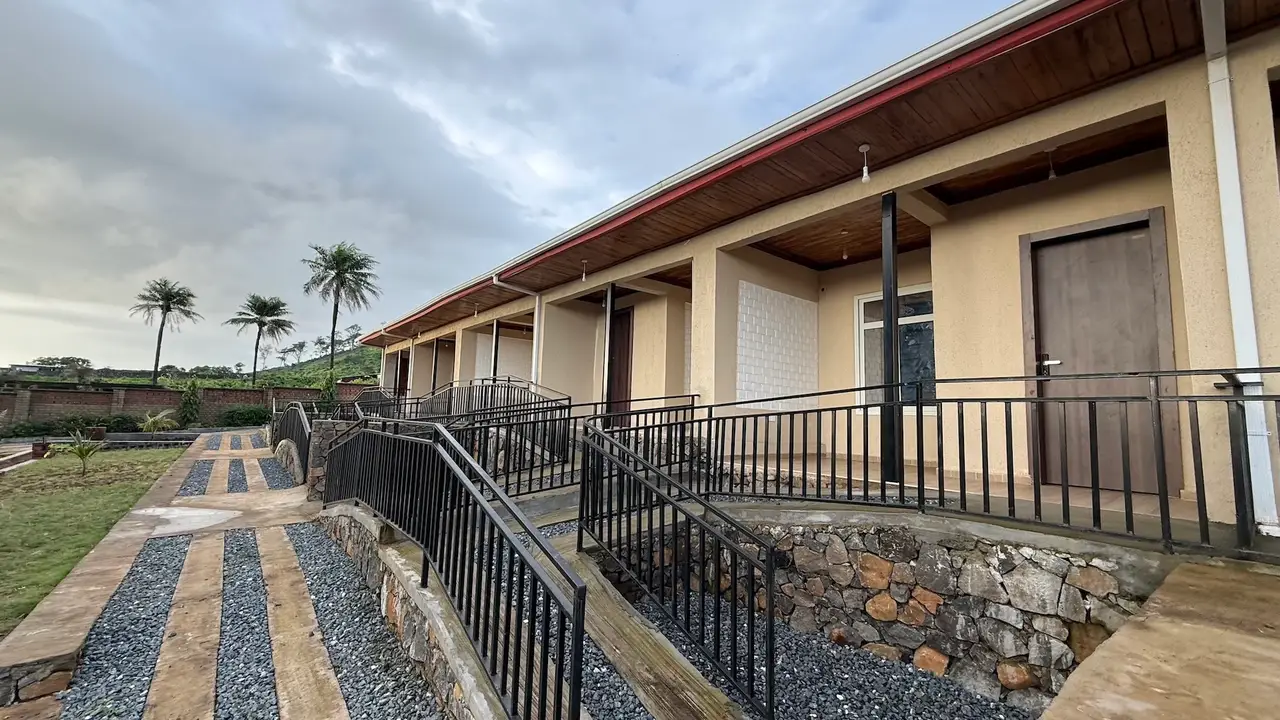
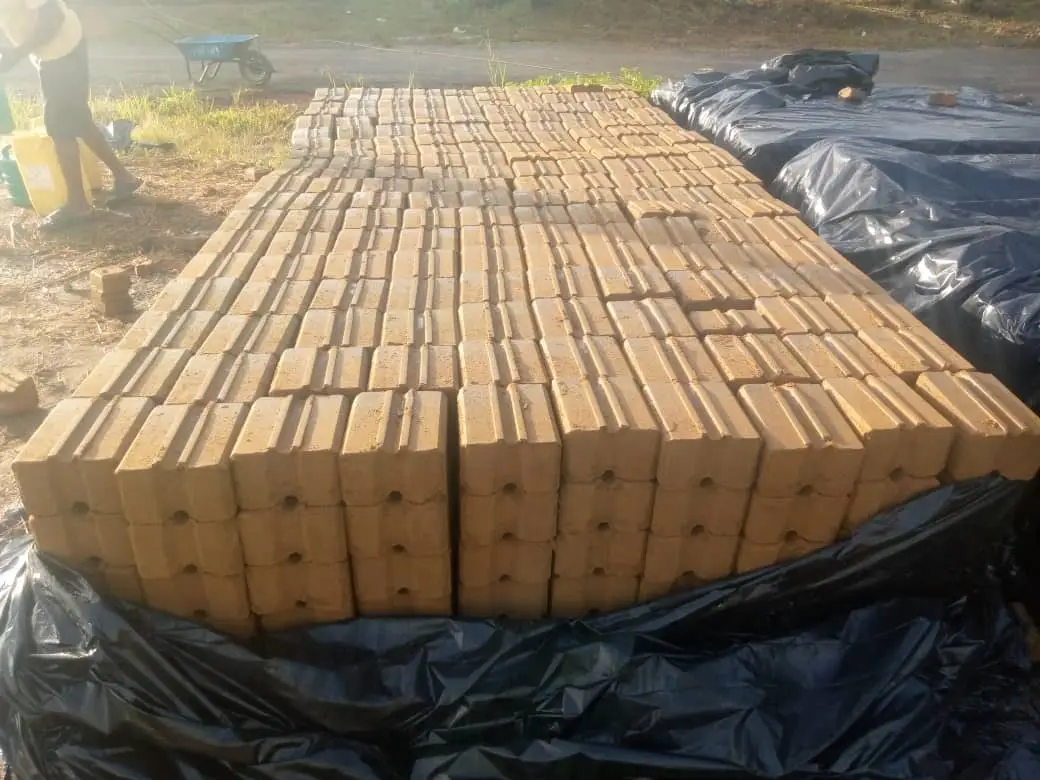
TpESTATE presses blocks on a Hydraform machine from sandy-loam soil, 8–10% cement and a little water. They cure for at least 14 days under plastic and dry for a further seven before building, then go up dry-stacked on natural stone foundations. The team trained in South Africa on the machine and uses these blocks to build at Kent.
- Made on site from local soil, so there is less to transport
- Cement is 8–10% of each block, and the rest is soil
- Average strength of 7 MPa for the blocks TpESTATE produces
- The interlocking shape needs no mortar in the horizontal joints, and works for walls, lintels and columns
- About 38 blocks per m² of wall, so quantities are easy to estimate
What you get
- 8–10% cement, the rest is soil, pressed to 7 MPa and above
- About 700 blocks a day on the Hydraform M9; 38 blocks per m² of wall
- From $0.45 (125 mm) and $0.65 (150 and 180 mm) per block
How it works
- 01Press: blocks made on site from local soil
- 02Cure 14 days under plastic, then dry 7 days in open air
- 03Dry-stack onto natural stone foundations — no mortar in horizontal joints
Made from local soil, cutting cement use and transport compared with concrete blocks.
Questions about ISSB blocks
What are ISSB blocks?
ISSB stands for interlocking stabilised soil blocks. They are made from sandy-loam soil mixed with cement and water, then pressed under high pressure into blocks that interlock, so walls are dry-stacked without mortar in the horizontal joints. TpESTATE makes them in Sierra Leone with a Hydraform machine.
How much cement do Hydraform blocks use?
TpESTATE's blocks use 8–10% cement, and the rest is soil. The cement is 42.5 grade Portland cement.
How strong are Hydraform blocks?
The average strength of the Hydraform blocks TpESTATE produces is 7 MPa. The recommended minimum for all blocks is 7 MPa, or about 1,000 psi.
How are the blocks made and cured?
Soil, cement and about 5–10% water are mixed to a slightly moist mix and moulded under high pressure. The fresh blocks are covered with plastic and watered daily so the cement can harden. TpESTATE cures them for at least 14 days under plastic, then lets them dry for another seven days before building.
What is the difference between stabilised and unstabilised earth blocks?
Stabilised blocks have cement added, which makes them stronger and more durable, so they suit load-bearing walls. Unstabilised blocks have nothing added and are generally used for non-load-bearing walls such as partitions. TpESTATE's Hydraform blocks are stabilised.
How does a soil-block wall compare with brick for carbon?
Walls pressed from site soil with 8–10% cement come to about 54.5 kg of CO₂ per m³ of wall at Kent, against 642.9 kg for fired clay brick. There is no kiln and no firing.
How many blocks does a wall need, and how fast can they be made?
A wall takes about 38 blocks per m². TpESTATE's Hydraform M9 press makes about 700 blocks a day.
How do I get a quote for ISSB blocks?
Ask for a block quote through the contact form, or call +232 76 617550 and say what you are building and roughly how many square metres of wall you need.